If you know Dale Hollow Lake, you’ve likely heard of the town that drowned: Willow Grove and the submerged schoolhouse that sits near Willow Grove Marina. But few realize that beneath the lake’s shimmering surface lie evidence of underwater cemeteries—remnants of communities forever changed when the lake was created.
How Many Graves Were Relocated?
When the Dale Hollow Dam was completed in 1943, the rising water covered entire valleys, homesteads, and cemeteries. Before the flooding, thousands of graves were relocated.
According to the 2018 Dale Hollow Lake Explorer (article: “Dale Hollow Dam Celebrates 75th Anniversary”), more than 2,000 gravesites were moved from what would become Dale Hollow Lake.
The Largest Cemetery Relocated on Dale Hollow
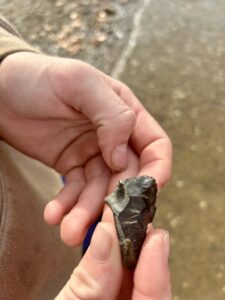
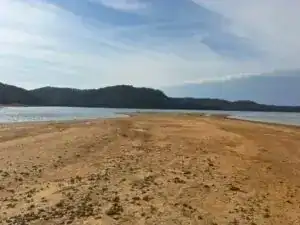
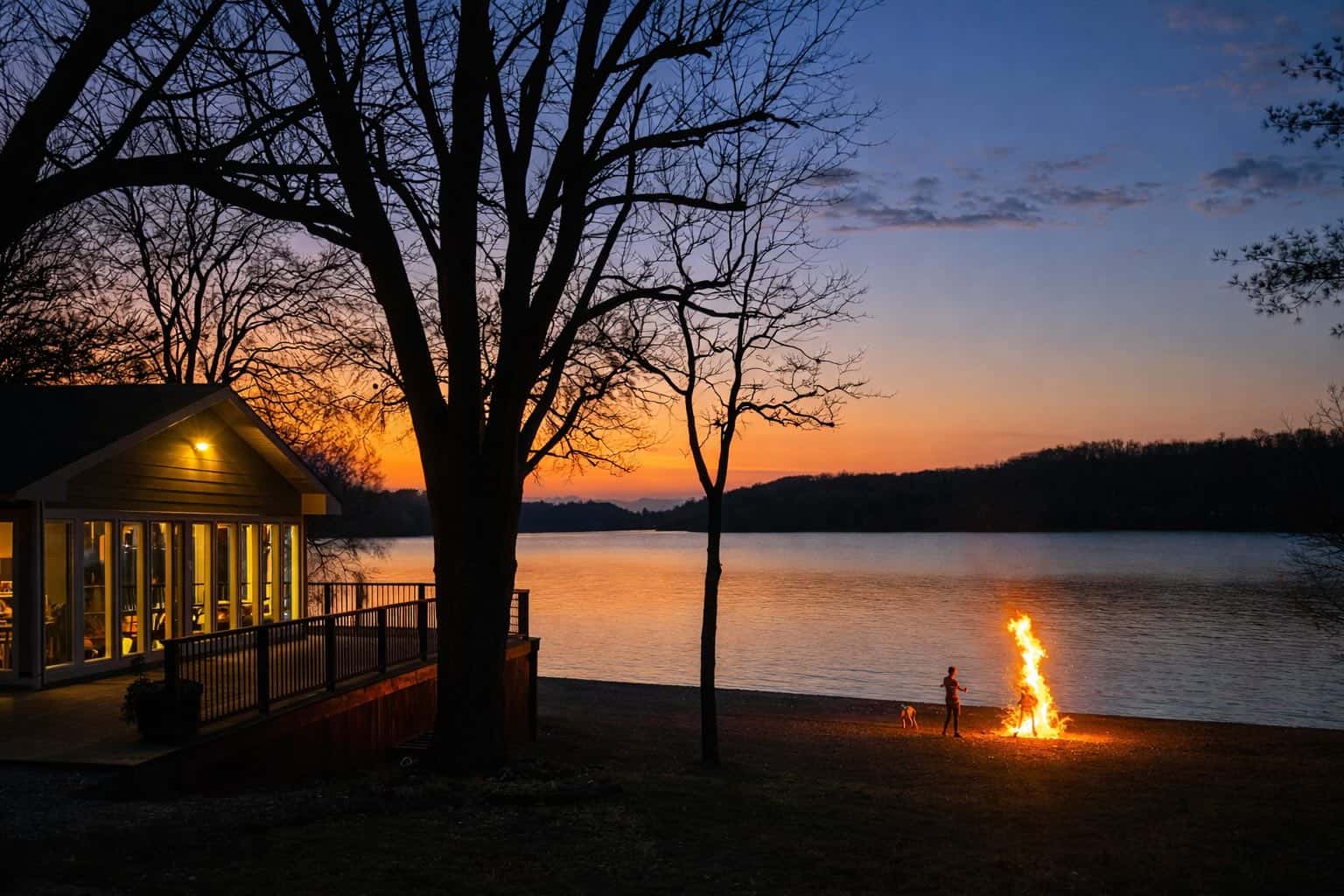
Unknown to summer boaters, the largest relocated cemetery once stood where people now ski and tube and fish and swim in front of The Lake House on Dale Hollow. Although the cemetery name could not be found, the area is known today as Gum Grove or Duncan Bottom. In this area, when water levels drop each fall and winter, an island emerges—rich in history and mystery.
Kayakers and boaters often explore the island during cooler months. Thanks to its sandy bottom, new artifacts and relics resurface every year. Arrowheads over 1000 years old are uncovered each fall. Fragments of carved flint, shells, and even remnants of structures once part of the cemetery appear.
According to Darren Shell’s “Haunted Dale Hollow,” the cemetery once contained 147 burials and was documented by the U.S. Army Corps of Engineers as the largest relocated cemetery on the lake.
What Remains of the Cemetery Today
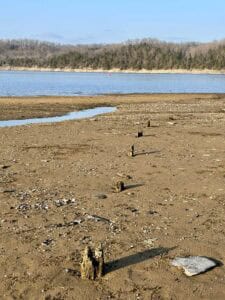
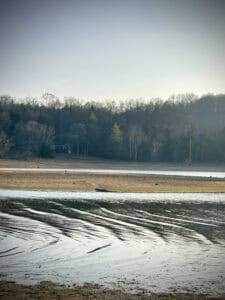
Only during the very lowest water levels is the underwater cemetery walkable without getting wet. In late November, there is usually only about a foot of water covering the cemetery, and it was easily explored using a good pair of muck boots. By December, the remnants of the old cemetery is fully uncovered.
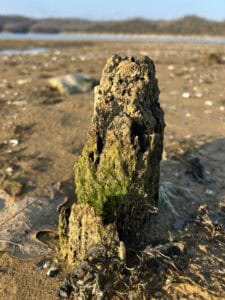
Wading through the area reveals decayed wooden fence posts, perhaps marking the old cemetery boundary. The posts follow a straight line in some places, but other posts can be found scattered around. It’s difficult to determine how large the cemetery area was, and where the fence began and ended.
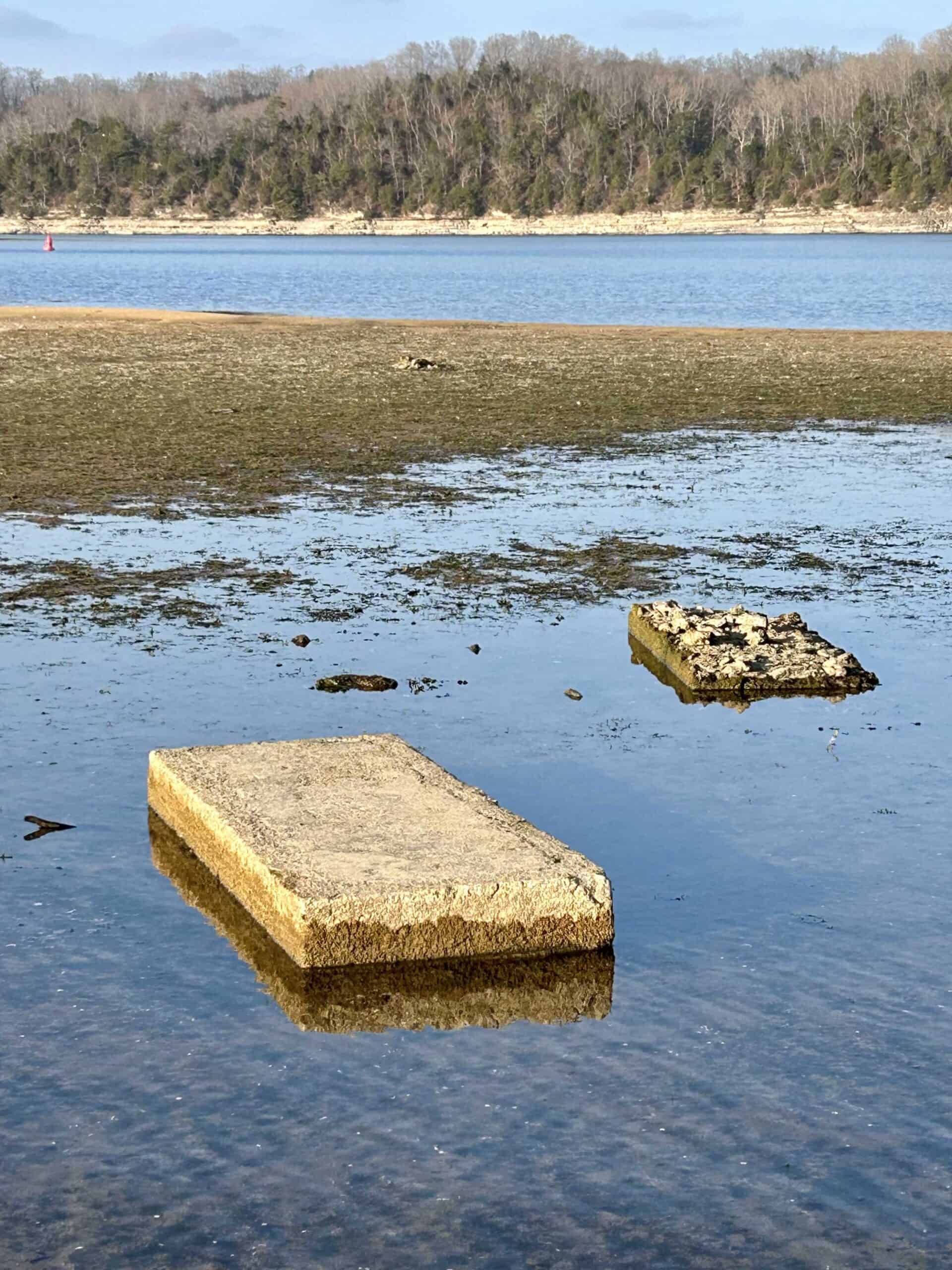
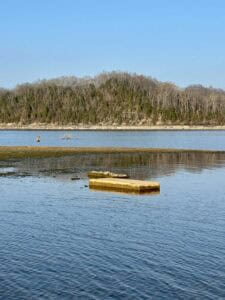
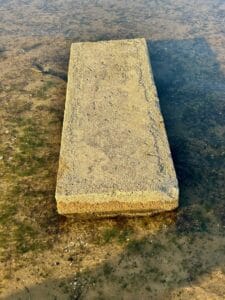
By far the most fascinating discovery are the flat concrete grave vault slabs in various stages of decay. Some are still covered with water, so it is a bit of a scavenger hunt to find them all, but we counted at least 6.
Other intriguing remnants such as a small wooden door lie on the sandy floor as well. Each visit seems to uncover more secrets of the area.
Wildlife at the Underwater Cemetery Site
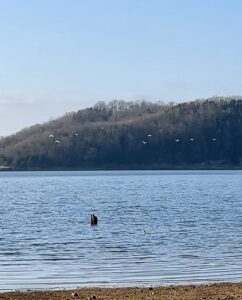
The island isn’t just a historical site—it’s also a wildlife refuge. Bald eagles, juveniles, egrets, and sandhill cranes often rest and feed here, making it a rare meeting place of natural beauty and deep history.
In late November, one day a year, a large group of sandhill cranes rest for the night on the island during their annual migration south. Their throaty call is loud as they circle above. Check out our Instagram or Facebook links for this year’s sandhill crane migration.
How to Visit the Underwater Cemetery
Unless you’re a diver, the islands are only accessible during the late Fall through Winter. At this time though, it is a quick kayak or canoe from in front of the Lake House. (Kayaks and a canoe are included with your Lake House stay). Morning, or when the water is calm offers the best viewing for relics still covered by water.
The closest island appears first. There is no evidence of the cemetery there, but it is the most explored of the two islands, and still presents some cool finds. The cemetery appears on the second island. This island appears between the red buoy marker and the first island. Even if it’s still submerged, it’s worth wading out there. The water is quite shallow, and you can see the wooden fence and grave slabs underwater.
The Lake House on Dale Hollow sits right on the cemetery site, offering the perfect base for your exploration. Check availability for fall and winter dates.

Exploring this area offers more than a glimpse into Dale Hollow’s past—it’s a reminder of the lives, communities, and memories that rest beneath its waters.
If you’re interested in the history of Dale Hollow Lake, Darren Shell’s books are a must read, particularly The History of Dale Hollow Lake.
Sources
-
- 2018 Dale Hollow Lake Explorer, article: “Dale Hollow Dam Celebrates 75th Anniversary”